Allan MacDonald Wins Kavli Prize in Nanoscience
MacDonald and two colleagues were honored for “foundational work that established the field of twistronics.”
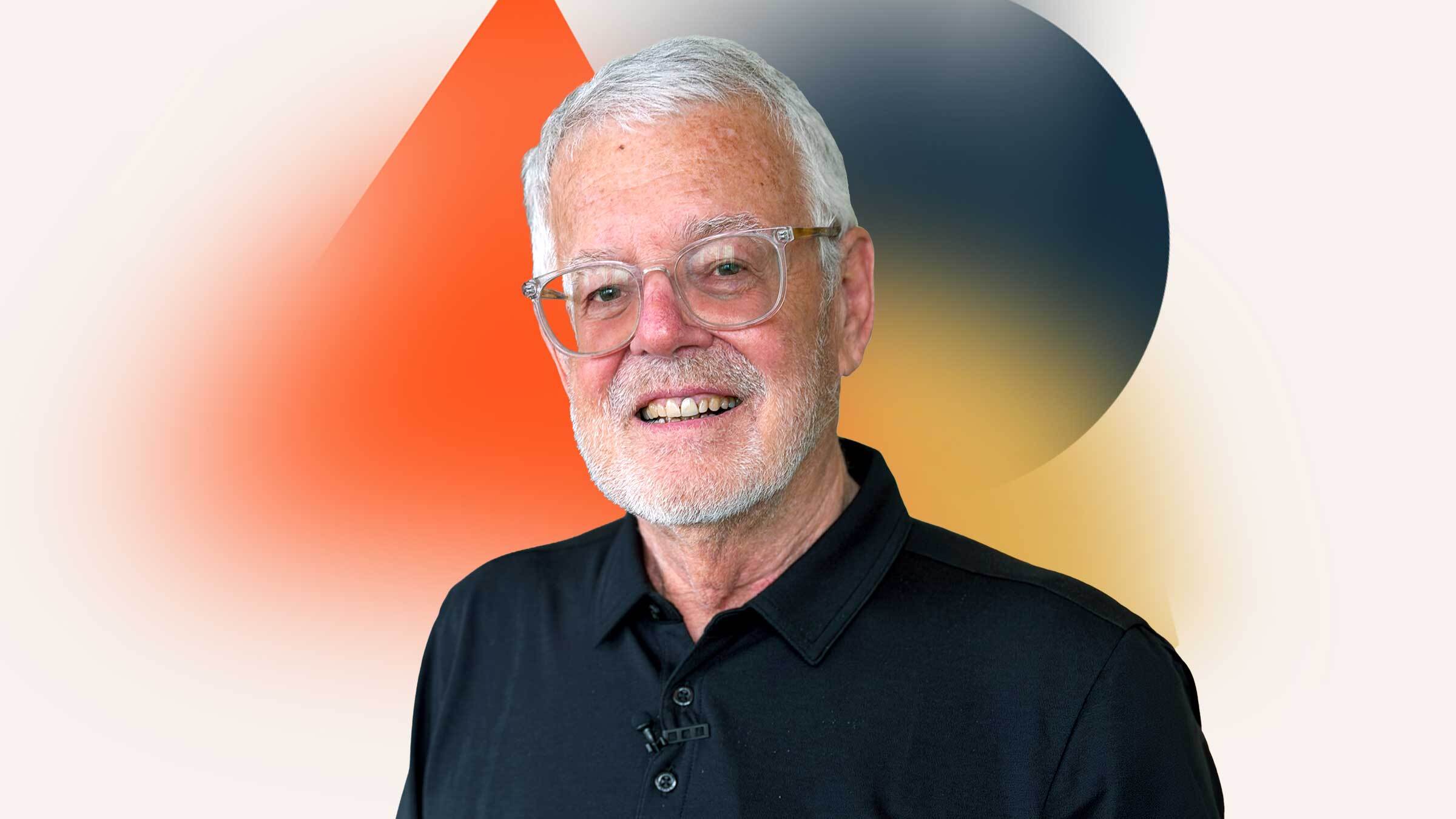
Allan MacDonald. Photo courtesy of The Norwegian Academy of Science and Letters.
For the first time since the Kavli Prize was first awarded in 2008 by The Norwegian Academy of Science and Letters, a Texas-based researcher has been awarded the honor in the nanoscience category.
Allan H. MacDonald, a theoretical physicist at The University of Texas at Austin, and two other scientists will share the prize in the nanoscience category for “foundational work that established the field of twistronics,” based on the idea that stacking two or more atomically thin layers of a material such as graphene on top of each other with a particular angular twist, can unlock extraordinary new properties without changing the composition of the materials. The approach holds enormous promise for a wide range of transformative applications — from more sustainable and efficient electricity transmission to new electronic devices to quantum computing technologies.
“Allan MacDonald’s curiosity and ambition have unlocked extraordinary possibilities,” said UT President Jim Davis. “His discovery is opening new frontiers in energy, electronics and quantum technology. We are proud to call him a Longhorn and excited to celebrate this latest achievement.”
A native of Nova Scotia, Canada, and a member of the National Academy of Sciences, MacDonald previously won the Wolf Prize in physics and the Frontiers of Knowledge Award, both shared with Pablo Jarillo-Herrero of the Massachusetts Institute of Technology, an experimental physicist who applied MacDonald’s ideas in the lab. MacDonald, Jarillo-Herrero and Eva Y. Andrei at Rutgers University were the three recipients of this year’s Kavli Prize in nanoscience.
“Honoring these excellent scientists is not only a recognition of achievements. It is an investment in our shared future, affirming the curiosity, rigor and courage that drive human progress,” said Annelin Eriksen, president of The Norwegian Academy of Science and Letters.
Since joining the UT Austin faculty in 2000, MacDonald has built upon a fascination with two-dimensional materials that he began pursuing during the 1980s. His 1,000 physics publications have more than 110,000 citations, and he has been granted three patents. MacDonald holds UT’s Sid W. Richardson Chair in Physics.
The Birth of Twistronics
“Twistronics introduced a new paradigm in nanoscience and opened a powerful new platform for exploring interaction-driven quantum materials,” said Mari-Ann Einarsrud, chair of the Kavli Prize Committee in Nanoscience.
In 2004, scientists discovered a simple way to make atomically thin sheets of graphene, composed of just a single layer of carbon atoms. Since then, physicists have been working to understand the properties of this two-dimensional material and its potential uses in a variety of technologies. Andrei pioneered research showing how geometric control of two-dimensional materials that were layered and twisted could change material properties. Her research innovations, singled out by a journal as a contender for “scientific breakthrough of the year” in 2009, were set in a broader theoretical framework by MacDonald.
MacDonald wondered what would happen if you stacked two atom-thin sheets of graphene on top of each other, but with a precise twist so the atoms in one sheet didn’t perfectly line up with atoms on the other. Using high-powered computers at the Texas Advanced Computing Center, he and his team, including then-postdoctoral scientist Rafi Bistritzer, predicted that unusual electrical properties would result from rotating two-dimensional sheets of graphene at the specific angle of 1.1 degrees, later termed the “magic angle.”
Jarillo-Herrero later confirmed experimentally that the magic angle unlocked superconductivity, the transmission of electricity without loss. In 2018 he and his colleagues published two papers on twistronics in the same issue of Nature.
Meanwhile, MacDonald’s theoretical work on twisted bilayer materials continues, with his latest paper titled “Two-component exciton condensates in an electron–hole bilayer” also publishing today in Nature.
Honoring groundbreaking scientific discovery, the recipients of the 2026 Kavli Prizes in the fields of astrophysics, nanoscience and neuroscience were all announced today, with 10 scientists from three fields with nine different nationalities honored for their research that has broadened human “understanding of the big, the small and the complex.” The laureates in each field will share $1 million. They will be awarded the Kavli Prize in Oslo, Norway, in September.